What Is a Spirit Box? How It Works and How to Use One Carefully
A spirit box scans radio frequencies to produce fragments of speech and static. Learn what it does, why words can seem meaningful, and how to document a session carefully.
By Paranormal Hunters · October 29, 2026 · 6 min read
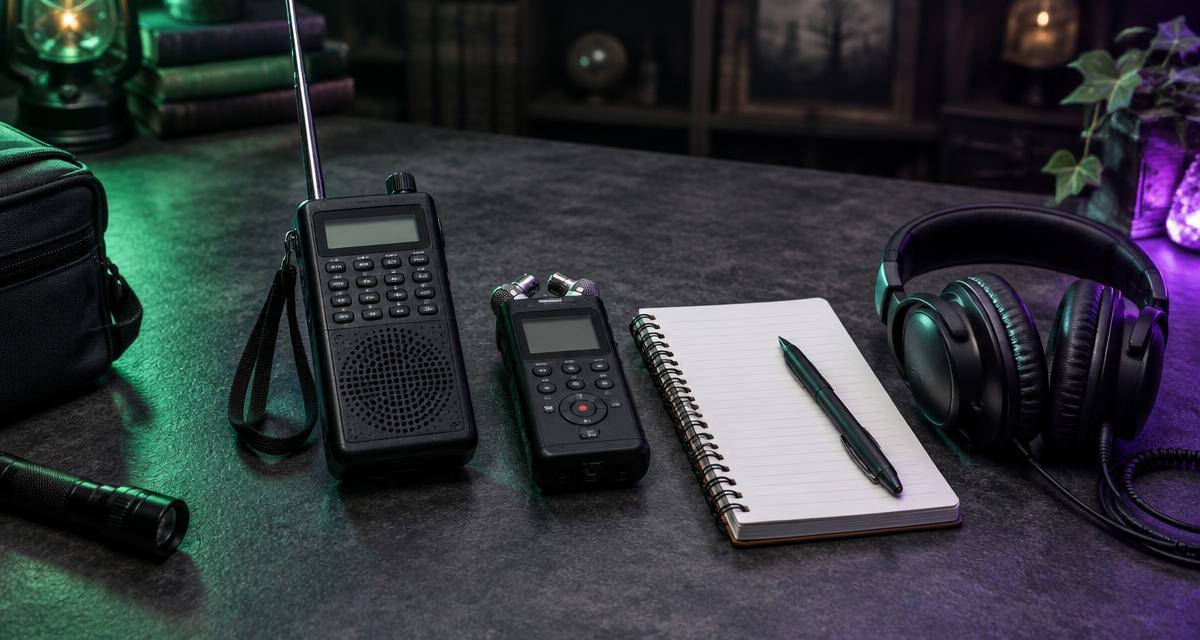
AI-generated editorial illustration; equipment shown is illustrative, not a specific product recommendation.
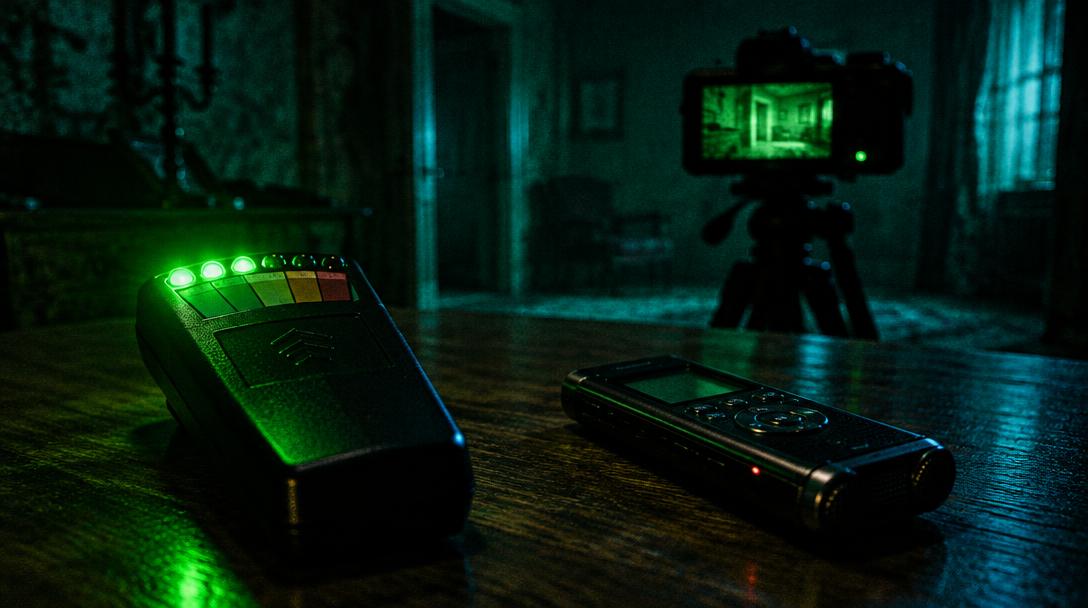
A spirit box, also called a ghost box, is a radio-based device that rapidly scans frequencies instead of staying on one station. The resulting sound contains static and brief fragments of broadcasts. Some paranormal investigators use that sound during question-and-answer sessions, listening for possible responses. Understanding the radio underneath the mystery is the best place to start.
How does a spirit box work?
A conventional radio holds a frequency so you can hear a program clearly. A radio-sweep spirit box repeatedly changes its tuning. Depending on the model, users may adjust the sweep speed, direction or radio band. As it passes stations, it can pick up syllables, words, music and noise. Those are ordinary sources of sound, even when a fragment seems surprisingly relevant to a question.
The Association TransCommunication describes this process in its radio-sweep case study and reports generally negative results from a blind listening test. That is useful context from an organization interested in the phenomenon itself: interpretations deserve testing rather than instant acceptance.
Does hearing an answer mean a spirit responded?
A recognizable word can come from a broadcast. An unclear sound can also seem like speech because our brains search for familiar patterns. Auditory pareidolia is the perception of words or voices in ambiguous sound. The British Psychological Society discusses how expectation and top-down processing can influence interpretations of electronic voice phenomena.
This does not mean someone is dishonest when they hear a phrase. It means the listening conditions matter. If a person tells you what to hear before playing a clip, their interpretation can shape yours. Record what was actually heard, compare independent interpretations, and investigate conventional sources before drawing conclusions.
Spirit box versus EVP: what is the difference?
EVP stands for electronic voice phenomena, a term used for apparent voices found in recordings, often during playback. A spirit-box session introduces a deliberate source of radio fragments into the room. Keeping that distinction in your notes helps reviewers separate ambient audio from sounds produced by the device. Do not describe a broadcast fragment as an unexplained voice simply because it was recorded during an investigation.
How to document a beginner spirit-box session
- Get permission to use the location and follow the team’s safety rules. Never enter a property without authorization.
- First record a baseline with the box off. Note traffic, conversations, appliances and other audible sources.
- Announce the date, location, people present, device model and settings. Include the radio band, sweep direction and speed where available.
- Place a separate audio recorder in a stable position and record continuously, including your questions and the device’s output.
- Ask one clear question at a time. Leave space to listen and avoid talking over the sound.
- Tag known noises out loud. Log any interesting moment with its timestamp rather than relying on memory.
- Keep the original recording unchanged. Review unlabelled clips independently and document any edits in copies.
Common mistakes to avoid
Repeatedly replaying a short fragment after agreeing on a phrase can make that phrase feel more obvious without improving the recording. Heavy filtering can change what listeners perceive. Publishing only a few seconds also removes the context needed to assess whether similar fragments occurred throughout the session. Preserve enough surrounding audio to compare the question, response and background conditions.
Also avoid assuming that every app sold as a spirit box works like a scanning radio. Check the developer’s documentation: an app may use a different sound source or processing method. Describe the actual mechanism you used, not just the product’s paranormal label.
Do beginners need to buy a spirit box?
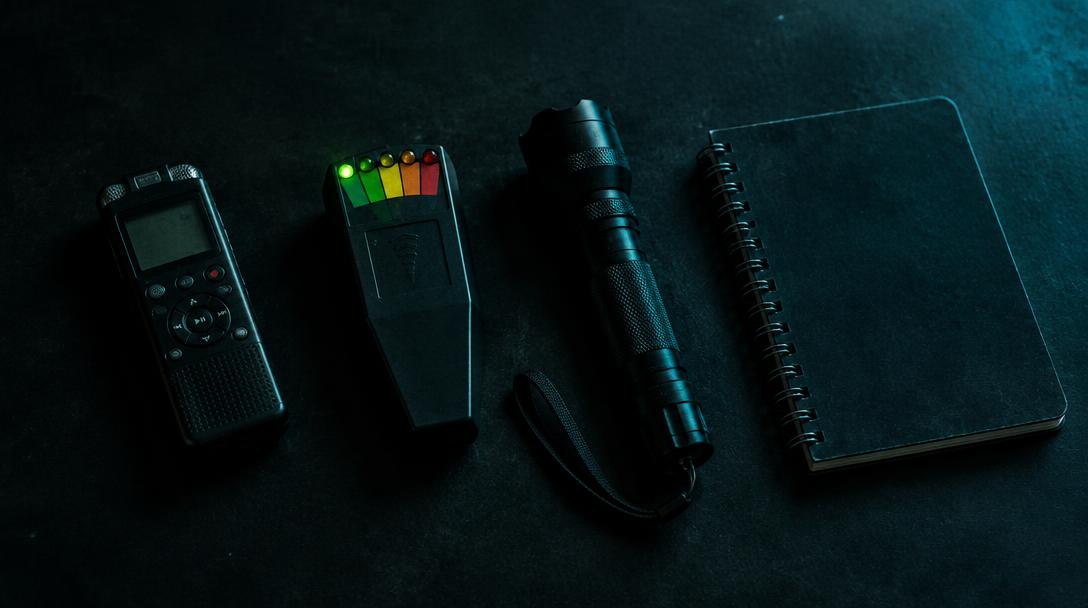
Not to start learning. A notebook, flashlight and a recorder you understand can support careful observation and documentation. Learn recording basics, safety and evidence review first. If you later add a spirit box, treat it as an experimental sound source with limitations—not a shortcut around those skills.
What should you do with an interesting recording?
Save the full original, write down the exact settings and timestamp, and compare blind listening notes. Look for broadcasts, nearby voices and other ordinary sources. If the source remains uncertain, say so plainly and retain the context. Careful records are useful even when a session produces nothing unusual.
Want a practical next step? Read our equipment and evidence-review articles below, or get In Pursuit of the Beyond for a beginner-friendly introduction. Free membership also includes access to the Foundations of Paranormal Investigation course. Members begin as Enthusiasts; passing Foundations makes them Trainees eligible to join official investigations.
Sources and further reading
Free guide
In Pursuit of the Beyond
Our free beginner's guide to your first investigation — equipment, checklists, evidence review and safety.